
Process
Before I begin painting, I spend time carefully studying my reference with pencil and sketchbook in hand. My process has been developed over years of work and shaped by the numerous influential teachers I’ve had. Each part of the process is an important step in realizing the complete work.
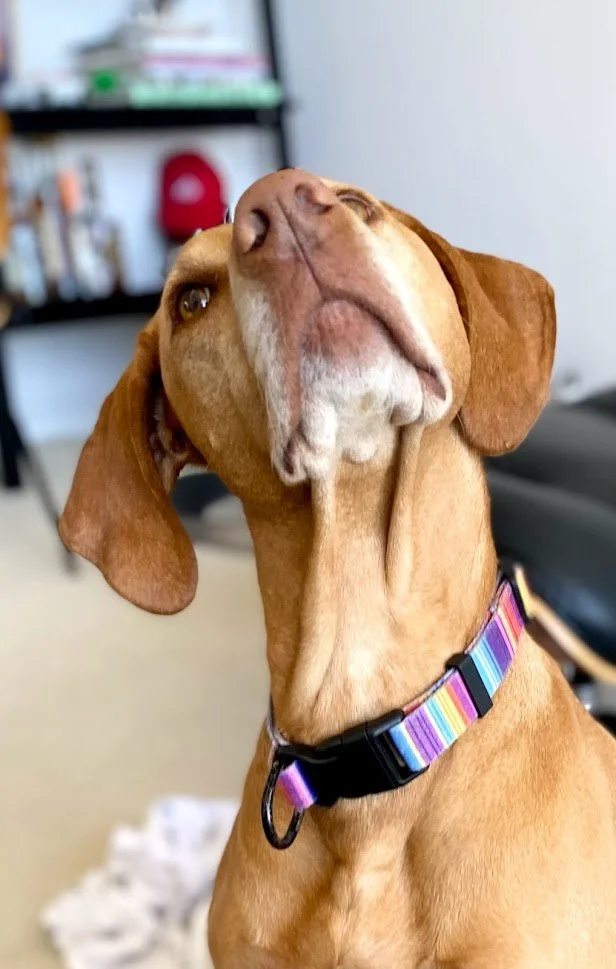
Right: original reference image
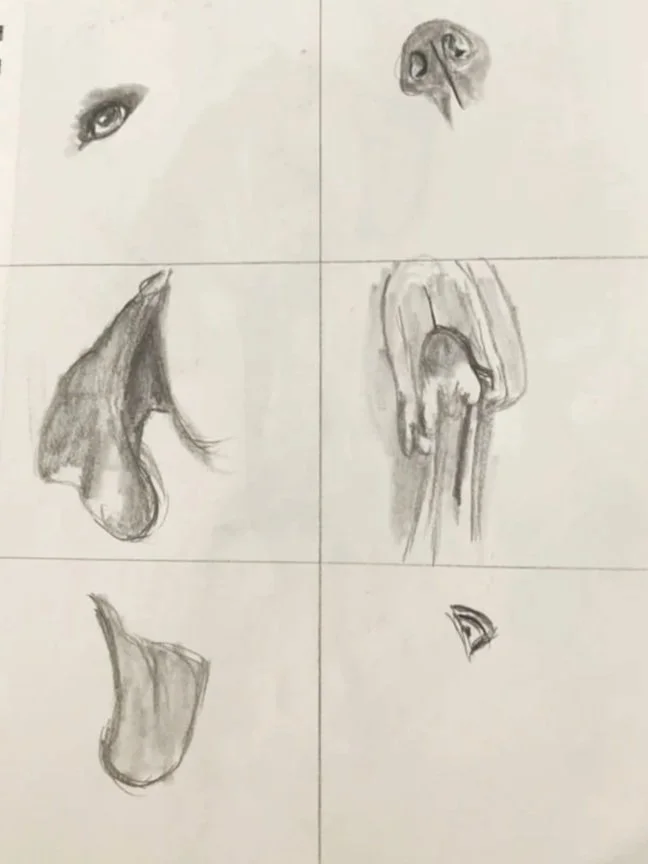
I start by dividing a page into six or eight small squares. Within each square, I sketch and practice drawing individual elements of the reference. This allows me to isolate details, explore forms, and identify any areas that may be challenging.
Step 1 : Mini Drawings
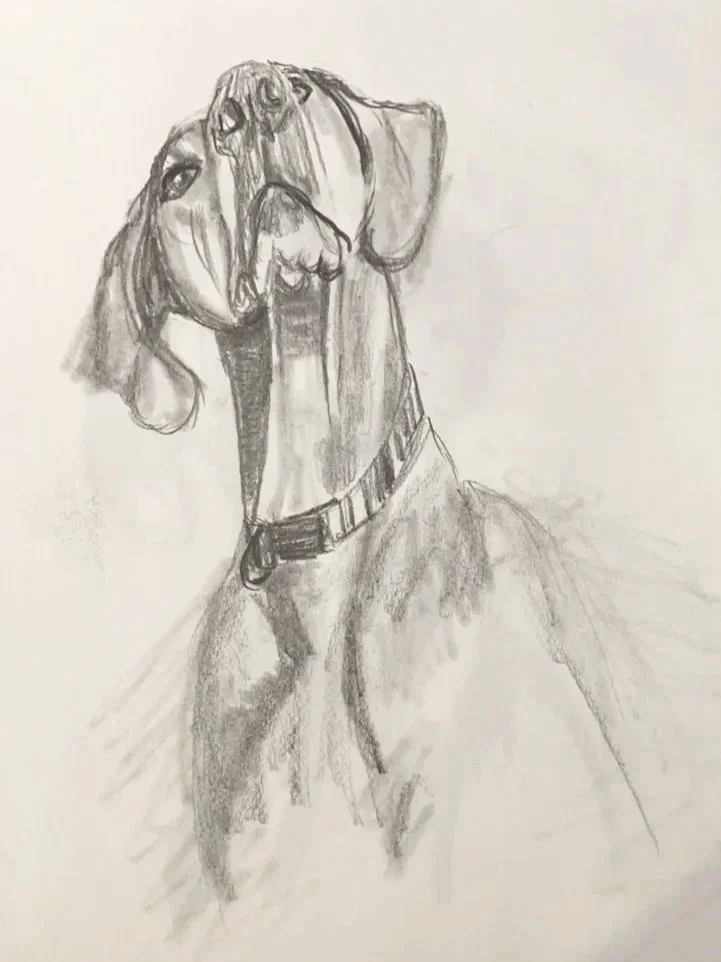
Next, I create a complete and detailed drawing on a full sketchbook page. This step helps me resolve composition, placement, and angles, while also embedding the image more deeply in my mind.
Step 2 : Full Drawing
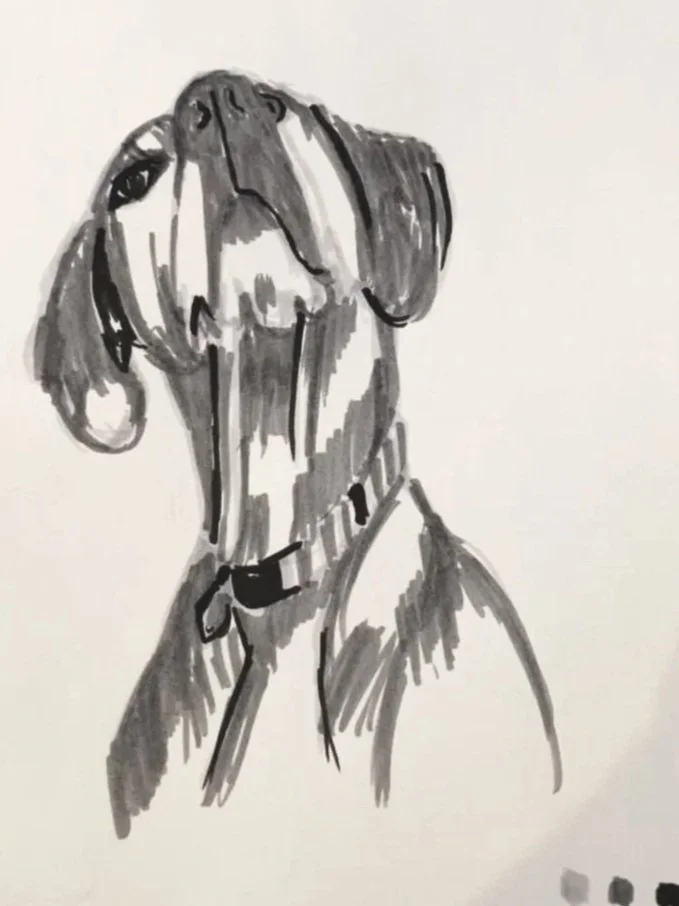
I then move on to a value study. By focusing on the darkest darks and the lightest lights, I establish the drama and the structure of the piece. Squinting at the reference, I use gray scale markers to map the range of values I observe.
Step 3 : Value Study
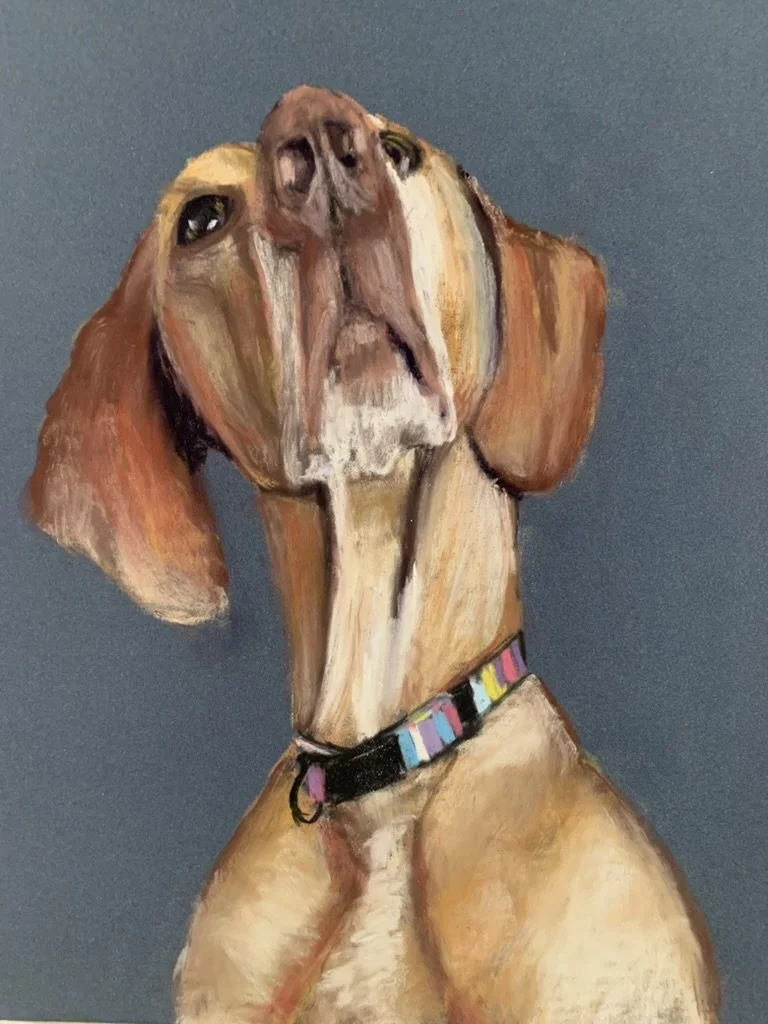
Finally, I draw the image onto pastel paper, using everything I have learned from breaking the reference down, applying my understanding of perspective, composition, and value to begin the final painting.
Step 4 : Pastel Painting